JPEN
HFP builds waste management infrastructure for the Philippines.
With non-incineration technology and a design that asks no advanced segregation of citizens, we take on a waste problem left unaddressed for 25 years. When cities become clean, economies begin to move. We take that first step from the Subic Bay Freeport (SBMA), a special economic zone under the direct jurisdiction of the Philippine government.
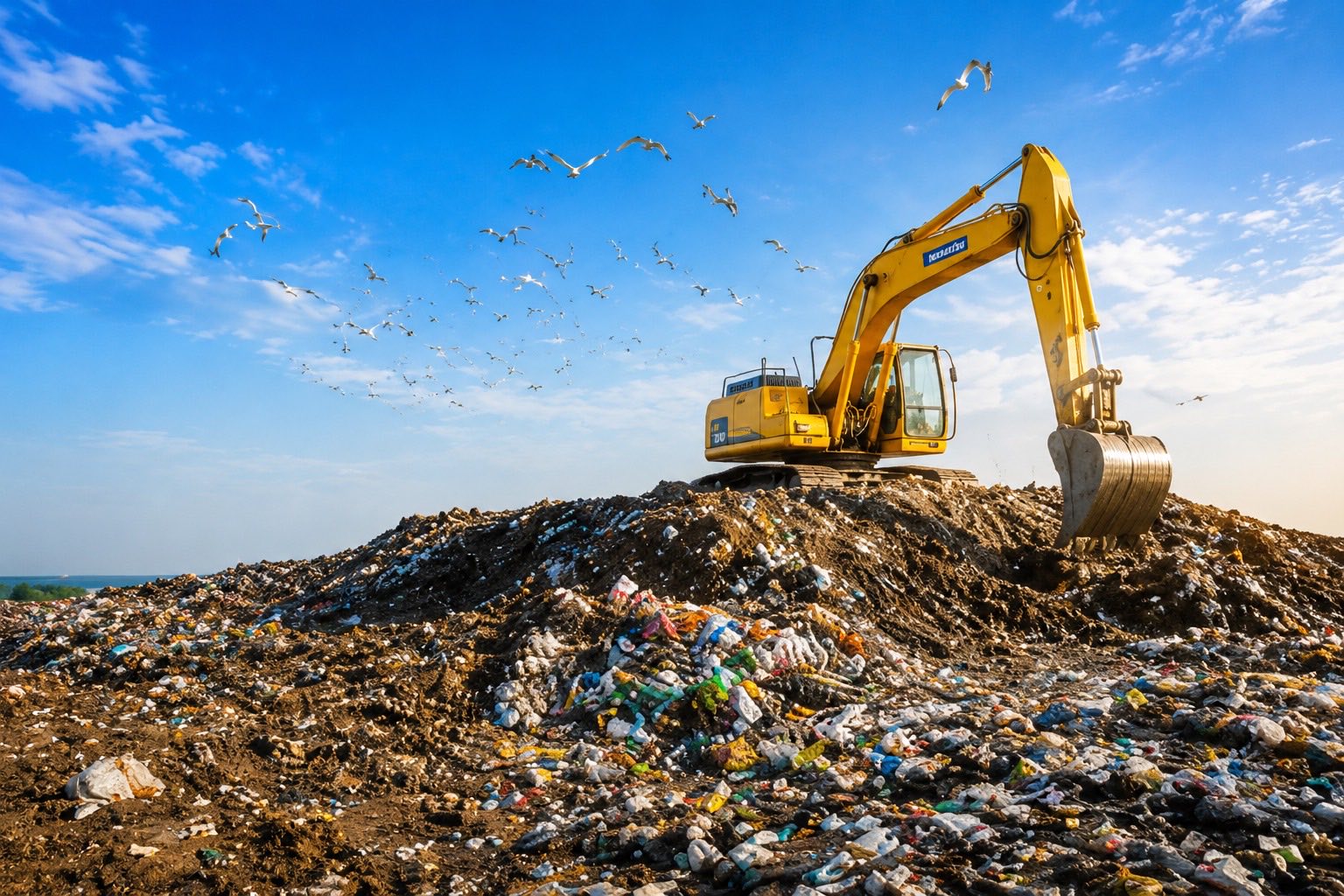
The Philippines generates about 46,000 tons of waste every day (2020 estimate), and for 25 years it has been left without an effective solution.
HFP addresses this challenge head-on with non-incineration gasification technology. The design shifts the burden of segregation from citizens and LGUs to the facility, and suppresses dioxin formation. We take the first step from SBMA, a special economic zone under the direct jurisdiction of the Philippine government.
We process waste with non-incineration gasification technology while suppressing dioxin formation. Citizens are not asked for advanced segregation; feedstock is prepared on our pre-treatment line.
Learn more →When waste disappears, cities become clean, people gather, and the economy begins to move. The treatment process creates value and leads to the regeneration of the whole region.
Learn more →Starting from Unit 1 at SBMA, we are advancing dialogue with multiple LGUs.
Roadmap →In the Philippines, incineration is legally restricted (RA8749, the Clean Air Act), yet no permit for a large-scale treatment facility has been granted in 25 years. Waste keeps piling up with nowhere to go.
* Waste volume is an approximation based on municipal solid waste (MSW) estimates for the three main island groups of the Philippines; figures range from roughly 40,000 to 61,000 t/day depending on source and year. Sources and assumptions
HFP processes this waste with non-incineration gasification technology. Citizens are not asked for advanced segregation; the facility's pre-treatment line prepares a processable feedstock.
The first step begins at SBMA, a special economic zone under the direct jurisdiction of the Philippine government.
Waste treatment becomes the starting point for regional regeneration.
Moreover, the treatment process itself creates value.
* The social cost figures are two scenario values from HFP's own estimate v3.0 (14 items A–N combined), not a continuous range; waste volume is based on municipal solid waste (MSW) estimates for the three main island groups of the Philippines. For details on the assumptions, please see For Investors.